
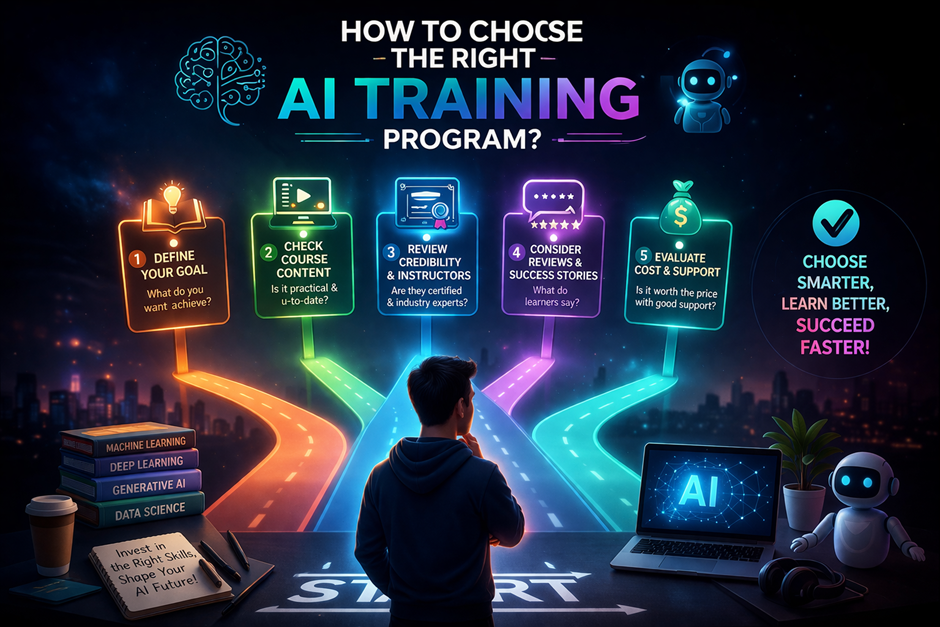
Faster than most expected, artificial intelligence reshapes entire fields, now ranking high among desired job abilities. If school keeps you busy, if work fills your days, or change seems overdue – picking how to learn becomes tricky. So many options crowd websites and classrooms alike; choosing well means slowing down, thinking deeper.
Picking a program that lines up with what you want to achieve starts by knowing yourself first. Your way of absorbing information matters just as much as the job path you’re aiming for.
1. Clear Learning Goals
Start by thinking about why you want to join a course. Pause first. What drives you? Figure that out before signing up anywhere
- Curious about your reason for picking up AI – could it be work, freelance goals, or just something you enjoy? One thing leads to another when motivation kicks in.
- Wondering about diving into data science, maybe robotics, perhaps automation?
- Looking to grasp the basics, yet wondering if deeper mastery is the goal instead?
Starting fresh? Try finding an introductory AI class that includes basics such as Python, stats, then simple algorithms. When you’ve worked with it before, something deeper could fit better – say neural networks or how machines understand speech.
Focusing on what you truly want cuts out most distractions right away.
2. Explore the Course Curriculum
Starting off strong, the syllabus holds everything together when it comes to studying artificial intelligence. Built right, a solid plan covers topics in a way that makes sense – layer by layer, piece after piece, fitting neatly into place
- Basics of programming (usually Python)
- Mathematics (linear algebra, probability, statistics)
- Machine learning concepts
- Neural networks and deep learning
- Everyday uses plus real examples
Start with messy data instead of clean examples if you want progress. Real problems come from doing tasks, not just watching lectures. The best AI training programs offer practical learning, certification, and career support.
3. Evaluate the Mode of Learning
Not everyone learns the same way. A few do best when lessons follow a clear plan at school, yet some feel more comfortable studying online where timing can shift.
Your choices appear like this
- Learning happens on your schedule through web-based classes. These programs fit well around job responsibilities
- Instructor-led training – Better for guided learning
- Hybrid programs – Combine flexibility with mentorship
Start with a training plan built around your day. Stay keen by picking one that fits how you work best.
4. Find Hands On Experience
Finding your footing in AI means doing it, not only reading about it. A good course will offer chances to try things out – hands-on tasks instead of only lectures
- Hands-on coding exercises
- Capstone projects
- Real-world problem-solving scenarios
- Access to tools and platforms
A solid collection of finished work can open doors during job searches. When companies look at applicants, real hands-on effort often matters far more than paper credentials.
5. Check Instructor Expertise
Who teaches you matters more than you might think. Look into who’s leading the sessions
- Finding out about their background in the field might help. Could be useful to check what work they’ve done before.
- Finding out if their experience includes actual AI work?
- Are they active in the tech community?
Fresh knowledge often comes from those who’ve lived it, not just studied it.
6. Check What People Say
Start by reading what past students have said about the course. Pay attention to comments regarding:
- Course quality
- Support and mentorship
- Practical relevance
- Career outcomes
Real talk from users shows exactly how things really are.
7. Certification and Recognition
A stamp of approval might help your job application stand out – provided it’s backed by a known authority. When looking into training for artificial intelligence and machine learning, pay attention to who’s behind the program
- Does anyone in the field actually accept this certification?
- Could this boost how others see you at work?
- Does the organization have a solid reputation?
True, what you can do counts most – yet holding the right credential might get you inside. Online AI classes are a flexible way to learn and master AI development skills from anywhere.
8. Placement Support and Career Guidance
Should landing work in AI matter to you, pick something providing:
- Resume building support
- Interview preparation
- Job placement assistance
- Networking opportunities
Internship spots show up in certain programs – hands-on learning happens that way. Real work settings come into play through these openings.
9. Compare Costs and Value
Fancy tags don’t always mean better lessons. Look past the cost – what sticks after the course ends matters more
- Course content quality
- Instructor expertise
- Practical exposure
- Career support
A smart pick beats a high price tag when it comes to learning AI – what matters is how much you gain for what you spend.
10. Flexibility and Updates
Right now, artificial intelligence keeps changing fast. Be certain the class covers everything it should
- New material shows up often
- Covers the latest tools and technologies
- Lifetime access comes included. Updates show up whenever they’re ready. Staying current happens without extra steps
Finding ways that fit how you work can make picking up new things easier. Slowing down or speeding up comes naturally when there is room to breathe.
Before enrolling, compare different AI developer courses to find the one that fits your goals.
Final Thoughts
Right at the start, picking an AI class that fits matters more than you might think. Since tons of choices pop up everywhere, zeroing in on what you want helps narrow things down. Look closely at how solid each program feels from the inside. Hands-on experience often weighs heavier than theory alone.
Slow down when deciding.
Curious about dipping your toes into artificial intelligence? That moment when you wonder where it begins – maybe right here.
Right now is the moment – step into learning today, shaping the tomorrow you imagine. Begin by looking at various classes, weighing each chance, picking one that fits where you aim to go.
Invest in your skills.
Start by asking questions – build a job around what you wonder about.
Right away might be the moment things shift – doors open when you dive into AI. Unexpected paths appear once you begin.
Call any time on 7848040790
Reach out by emailing jjdais.ai@gmail.com
Room-734, seventh floor, Esplanade mall, Rasulgarh, Bhubaneswar, odisha
Selling your knowledge starts by doing something real. Work comes when people see value in what you share. Money follows once trust builds through honest effort.